
Best Vitamins Postpartum Hair 2026: Proven Guide for Healthy Growth
best vitamins for postpartum hair loss
Understanding Postpartum Hair Loss: What New Moms Need to Know
If you're watching clumps of hair fall out in the shower just months after welcoming your baby, you're not alone. Postpartum hair shedding affects up to 50% of new moms and stems from the dramatic hormonal shift your body experiences after delivery. During pregnancy, elevated estrogen keeps hair in a prolonged growth phase--creating that thick, glossy pregnancy hair many moms notice. Once those hormone levels drop postpartum, all that "extra" hair enters a shedding phase simultaneously.
Key Takeaways
- Postpartum hair shedding is a common experience, affecting up to half of new mothers.
- This hair loss is a direct result of the dramatic hormonal shifts your body undergoes after delivery.
- During pregnancy, high estrogen levels keep hair in a prolonged growth phase, but their drop postpartum causes simultaneous shedding.
The Hormonal Shifts Behind the Shedding
Your hair follows a natural cycle: growth, rest, and shedding. Pregnancy pauses this cycle, which is why many moms notice thicker, fuller hair during those nine months. After birth, estrogen drops, and your hair catches up on the shedding it skipped. This process--called telogen effluvium--is temporary but can feel alarming when you see the volume coming out daily.
Typical Timeline and When to Expect Regrowth
Most moms notice shedding beginning around three to four months postpartum, peaking between months four and six. New baby hairs typically start appearing by months eight to twelve. Speed depends on your nutrient stores and overall health. If shedding continues past one year or you notice bald patches, consult your doctor to rule out thyroid issues or iron deficiency.
Common Nutrient Gaps in Breastfeeding Moms
Breastfeeding demands significant nutritional resources. Your body prioritizes milk production over hair growth, period. Iron, zinc, vitamin D, and B vitamins often become depleted--especially if you experienced blood loss during delivery. These gaps slow regrowth and prolong shedding. Addressing deficiencies with targeted nutrition is one of the most effective ways to support your hair while nourishing your baby. Consider supplementing with organic fenugreek to help replenish vital nutrients naturally.
Key Insight: Postpartum hair loss is a normal biological response, not a sign you're doing something wrong. Restoring depleted nutrients helps your body recover faster and supports healthier regrowth.
Top Vitamins for Postpartum Hair Loss: Science-Backed Choices
When searching for the best vitamins for postpartum hair loss, focus on replenishing what pregnancy and breastfeeding have depleted. Bioavailability matters as much as the nutrient itself--your body needs forms it can actually absorb and use.
Iron and Zinc: Rebuilding from Nutrient Depletion
Iron is often the first nutrient to drop after childbirth. Low iron directly affects hair follicle function, slowing regrowth and prolonging shedding. Look for chelated forms such as Ferrochel bisglycinate, which absorb well and are gentler on digestion than standard ferrous sulfate.
Zinc supports protein synthesis and cell division in hair follicles. Deficiency is common in breastfeeding moms since zinc transfers into breast milk at high rates. Together, these two minerals create a strong foundation for recovery.
Vitamin D, B12, and Biotin: Supporting Follicle Strength
Vitamin D receptors exist in hair follicles, and low levels correlate with slower regrowth. Many postpartum women are deficient, especially when spending most of the day indoors with a newborn.
B12 supports red blood cell production, which delivers oxygen to your scalp. Methylcobalamin is an active form your body can use immediately without conversion.
Biotin supports keratin structure but works best when other deficiencies are addressed first. It's not a standalone solution.
Folate and Omega-3s: Why Active Forms Matter for Moms
Standard folic acid requires conversion steps that some women struggle with--particularly those with MTHFR gene variants affecting folate metabolism. Methylfolate is a bioavailable form your body can use directly, supporting cellular renewal without that conversion bottleneck.
Omega-3s, including DHA, support overall postpartum recovery and baby's development during breastfeeding. Algae-based DHA is a plant-based option that also supports scalp health. For a combined prenatal approach, check out our Prenatal + DHA formula.
Breastfeeding-Safe Options Explained
Safety matters when you're nursing. The best vitamins for postpartum hair loss while breastfeeding avoid unnecessary stimulants, common allergens, and excess additives. Third-party testing confirms product quality. Formulas designed specifically for postpartum moms better match the demands of lactation.
Review labels for gluten, soy, dairy, and artificial additives if you or your baby is sensitive to these ingredients. For more options tailored to nursing moms, explore our breastfeeding supplements collection.
Mama's Select Postpartum Nutrition: Clean Support for Hair and Recovery
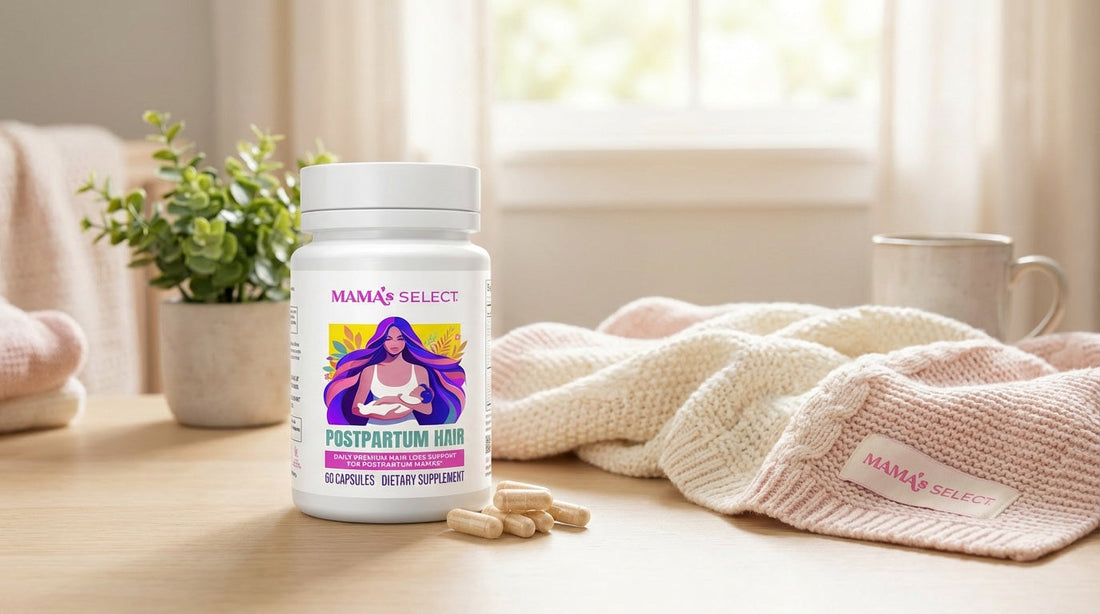
We created Postpartum Hair after seeing too many new moms struggle with formulas not designed for postpartum needs. The fourth trimester demands more than a generic multivitamin. You're recovering from pregnancy, possibly breastfeeding around the clock, and rebuilding nutrient stores depleted over nine months.
How Our Formula Fills Postpartum Gaps
Our Postpartum Hair formula uses highly absorbable nutrients that support cellular renewal and overall postpartum recovery. We chose vegan-friendly, Non-GMO ingredients--no gluten, soy, dairy, nuts, shellfish, or artificial additives. Each ingredient was selected with bioavailability and breastfeeding safety in mind.
No guesswork. No unnecessary fillers. Just the nutrients your hair follicles need to shift from shedding back to growth.
Allergen-Free, Third-Party Tested: What Sets Us Apart
We manufacture every batch in a GMP-certified facility in the United States. Each production run undergoes independent third-party testing to verify identity and screen for common contaminants.
This matters during breastfeeding when you want confidence in what you take. We also offer a 100% money-back guarantee and free shipping across the United States because we want you to feel supported, not pressured.
Real Mom Stories: Hair Regrowth While Breastfeeding
Moms report noticing new baby hairs along the hairline within several weeks of consistent use. Shedding can feel more manageable by the first or second month. Individual timelines vary--postpartum shedding still follows a natural cycle. What targeted nutrition does is support your body's recovery so you're not trying to regrow hair while running low on key nutrients.
Real Support: We designed our postpartum formula with input from moms who lived through the hair loss, the exhaustion, and the uncertainty about what's safe during nursing. Your recovery matters to us.
Breastfeeding-Safe Shampoos and Hair Care Routines for Faster Results
Finding the best shampoo for postpartum hair loss while breastfeeding means looking past marketing claims and checking the ingredient list. Topical care can't reverse hormonal shedding on its own, but pairing gentle, scalp-friendly products with internal nutrition creates a better environment for regrowth.
Gentle Shampoos That Nourish Without Harm
Look for shampoos free from sulfates, parabens, and synthetic fragrances--all of which can irritate a sensitive postpartum scalp. Ingredients such as peptides or mild botanical extracts may support scalp comfort when used consistently.
If you choose formulas with caffeine or biotin, treat them as supportive scalp-care ingredients rather than a standalone fix. Avoid harsh detergents that strip natural oils and leave your scalp feeling tight or itchy.
Building a Simple Daily Routine: Vitamins Inside, Care Outside
Start your day with your supplement and a protein-rich breakfast to support overall intake. Wash your hair two to three times per week with a gentle shampoo, massaging your scalp lightly to boost circulation.
Skip tight hairstyles that pull on fragile regrowth. Let your hair air-dry when possible to reduce heat damage. A silk or satin pillowcase at night reduces friction that can snap delicate new hairs.
Bundling Nutrition with Topical Support
The best products for postpartum hair loss while breastfeeding support you from the inside out. Vitamins and minerals rebuild nutrient stores and support follicle function, while external care protects the hair you have and supports scalp comfort. Used together, they address both the root cause and the day-to-day appearance of thinning. For a complete care system, try our Postpartum Hair formula alongside gentle shampoo routines.
Diet, Lifestyle, and When to Seek Extra Help
Supplements work best alongside whole foods and sustainable habits that support your entire postpartum recovery--not just your hair.
Food Sources to Pair with Supplements
Prioritize iron-rich foods such as lean beef, lentils, and spinach. Pair them with vitamin C sources such as bell peppers or citrus to boost absorption--iron needs an acidic environment to absorb efficiently.
Eggs provide protein and biotin. Fatty fish or chia seeds deliver omega-3s. If you're breastfeeding, you'll need additional calories from nutrient-dense foods. Exact needs vary, so listen to hunger cues and follow guidance from your clinician.
Daily Habits for Hair Health as a New Mom
Sleep disruption and stress raise cortisol, which may prolong shedding. While uninterrupted sleep is unrealistic with a newborn, prioritize rest when possible and ask for help when it's available.
Stay hydrated--aim for regular fluids throughout the day. Gentle movement, such as walks or postpartum yoga, supports circulation and stress management. Even 10 minutes counts.
Signs to Talk to Your Doctor
If shedding continues past 12 months, you develop bald patches, or you notice symptoms such as extreme fatigue or unexplained weight changes, schedule a checkup. Thyroid disorders and anemia can mimic or worsen postpartum hair loss, and both require medical evaluation.
Lab work can also identify deficiencies that may require clinician-guided dosing. Trust your instincts. If something feels off, it's worth getting checked.
Supporting Your Recovery: What Works and What to Watch
Effective Strategies
- Targeted supplementation with bioavailable forms that support postpartum recovery
- A consistent routine combining internal nutrition with gentle topical care
- Protein-rich meals with iron and vitamin C pairings to support absorption
- Allergen-free, third-party tested formulas designed for breastfeeding
- Scalp massage and reduced heat styling to protect fragile regrowth
Common Pitfalls
- Expecting overnight results when follicle cycles take months to shift
- Choosing low-quality supplements with poorly absorbed forms
- Using harsh shampoos with sulfates that can irritate the scalp
- Delaying a medical visit when shedding lasts beyond 12 months
- Relying only on topical products without addressing internal nutrient gaps
Postpartum hair loss can feel isolating until you realize how widespread it really is. Your body typically regrows hair once it has the right resources--but timing varies based on your nutrient stores, stress levels, and overall health.
Choosing the best vitamins for postpartum hair loss means looking past generic multivitamins and focusing on well-formulated options that match postpartum demands.
We built Postpartum Hair to meet those needs without compromise. Our formula supports postpartum nutrition with clean, thoughtfully selected ingredients, manufactured in a GMP-certified facility in the United States. Each batch undergoes independent third-party testing. The formula is vegan, Non-GMO, allergen-free, and made without artificial additives or harsh fillers.
This level of transparency matters when you're making decisions that affect both you and your baby.
Internal nutrition paired with external care delivers more consistent results. The best postpartum hair loss products work as a system, not in isolation. A gentle, sulfate-free shampoo supports scalp comfort while targeted nutrients help support follicle function over time. Add protein-rich meals, hydration, and rest when possible--you create conditions that support regrowth within a typical postpartum timeline.
If shedding continues past one year, you notice bald patches, or you experience extreme fatigue or unexplained weight changes, consult your doctor. Thyroid disorders and anemia may require care beyond over-the-counter supplements. Lab work identifies deficiencies that need tailored dosing.
Your instincts matter. If something feels off, it's worth investigating.
The fourth trimester is demanding enough without the added stress of watching your hair shed. You deserve support that's safe, effective, and designed for this season. Whether you're breastfeeding, recovering from delivery, or trying to feel like yourself again, targeted nutrition supports your body through the shedding phase and into regrowth.
We aim to keep the process simple, transparent, and backed by science you can trust.
Frequently Asked Questions
What vitamins are good for postpartum hair loss?
After delivery, your body needs to replenish nutrients depleted during pregnancy and breastfeeding. We often see moms benefit from specific vitamins like iron, zinc, vitamin D, B12, and active folate forms like methylfolate. These help support hair follicle function and overall recovery.
What helps with hair loss after postpartum?
Postpartum hair loss is a normal, temporary response to hormonal changes after birth. The most effective way to help is by restoring the nutrients depleted during pregnancy and breastfeeding. Focusing on targeted nutrition can support your body's recovery and healthier regrowth.
What deficiency causes postpartum hair loss?
The main cause of postpartum hair loss is the natural drop in estrogen after delivery, which triggers a shedding phase. However, nutrient deficiencies, especially iron, zinc, vitamin D, and B vitamins, can prolong this shedding. Addressing these gaps is important for recovery.
Should I take prenatals for postpartum hair loss?
While prenatals are important during pregnancy, your body's needs shift significantly postpartum. A formula specifically designed for postpartum recovery, like our Postpartum Hair formula, focuses on replenishing nutrients depleted after birth and during breastfeeding. This targeted approach can better support hair regrowth and overall well-being.
When does postpartum hair loss typically start and end?
Most moms notice hair shedding beginning around three to four months after birth, often peaking between months four and six. Regrowth usually starts by eight to twelve months postpartum. If shedding continues past one year, it's a good idea to chat with your doctor.
Is postpartum hair loss normal, or is it a sign of a problem?
It's completely normal, mama, and affects up to 50% of new moms. Postpartum hair loss is a natural biological response to the dramatic hormonal shifts your body experiences after delivery. It's not a sign that you're doing anything wrong.
Can breastfeeding affect postpartum hair loss?
Yes, breastfeeding can impact your nutrient stores, as your body prioritizes milk production. This can lead to common nutrient gaps like iron, zinc, vitamin D, and B vitamins, which may slow hair regrowth. Supporting your body with targeted nutrition is key during this time.